Early leak warning signs for apartment and hotel pools
Why water loss matters in shared pools
Managing a pool at an apartment complex or hotel is different from looking after a backyard one. The water is used harder, the equipment runs longer, and the people responsible for it are often juggling dozens of other tasks. A small leak that would be noticed quickly in a home pool can go unnoticed for weeks in a busy commercial setting, driving up operating costs and causing damage to the structure and the surrounding deck. The key is knowing what to look for before the problem gets expensive.
What counts as normal water loss
Every pool loses some water. Evaporation is the main cause, especially in hot, dry or windy weather. Splash-out from swimmers adds to it, and backwashing the filter sends water down the drain deliberately. A well-run commercial pool usually loses between a quarter and a half inch of water per day in summer, and less in cooler months. When the loss goes beyond that range, something else is going on. The trick is to measure the drop correctly and compare it against a known baseline.
The bucket test for shared pools
The simplest way to tell evaporation from a leak is the bucket test. Fill a five-gallon bucket with pool water to about an inch from the rim, set it on the pool step so the water inside the bucket is level with the pool water, and mark both water lines. After 24 hours, compare the drop in the bucket with the drop in the pool. If the pool lost significantly more water than the bucket, a leak is likely. This test works well for a homeowner, but in a hotel or apartment setting the results can be thrown off by swimmers, the circulation system cycling on and off, or wind. Still, it is a good first check that any facility manager can do without special tools.
Reading the water meter
Many commercial pools have a dedicated water meter or a fill line with a meter on it. That meter is one of the best early warning devices available. If the auto-fill is running more often than usual, or if the manual fill records show a sudden jump in water use, something is wrong. A facility manager can log the meter reading daily for a week and look for a pattern. A steady increase in make-up water, especially overnight when the pool is not in use, points to a leak in the plumbing network or the pool shell. This method is more reliable than the bucket test because it removes evaporation from the equation: the meter measures only the water added, not the water lost to the air.

Checking the equipment pad
The pump, filter, heater and valves on the equipment pad are common leak sources that are easy to spot. A puddle under the pump, a dripping valve, or moisture around the filter gauge all indicate a leak that is wasting water and possibly damaging the equipment. These leaks often happen at threaded connections, gaskets, or the pump seal. A visual check of the equipment pad once a week, done first thing in the morning when the pump is running, can catch a small drip before it turns into a stream. If the pad is dry but the pool is still losing water, the leak is likely underground or in the pool itself.
Watching the water level over time
One of the most telling signs of a leak is the way the water level behaves when the pump is off. In a tight pool, the water should stop dropping once the pump shuts down, because evaporation is the only loss. If the level continues to fall at the same rate with the pump off, the leak is in the shell, a light niche, a return line, or a skimmer. This test is simple: turn off the circulation system overnight and mark the water level in the morning. Check it again before the pump comes back on. A drop of more than an eighth of an inch in still, cool weather is suspicious. Repeating the test a few times gives a clearer picture.
What the skimmers tell you
Skimmers are the openings in the pool wall where surface water is pulled into the filtration system. They have a weir, a floating gate that adjusts to the water level. If the water level drops below the skimmer mouth, the pump starts sucking air, which can damage the impeller and reduce circulation. A facility manager who notices the skimmers pulling air or making a gulping sound should suspect a leak. Another clue is debris collecting on the pool floor near the main drain: if the water level is too low for the skimmer to work properly, the circulation system struggles to clean the pool, and dirt settles where it should not.
Pressure testing the plumbing
When the visible checks do not find the leak, the next step is a pressure test of the plumbing network. A professional uses a gauge and a pump to pressurize the pipes and see if the pressure holds. A drop in pressure means there is a break or a loose joint somewhere underground or in the slab. This test is not something a facility manager can do with basic tools, but understanding what it involves helps when talking to a leak detection specialist. The same test can be done on the return lines and the suction lines separately, which narrows down the search area.
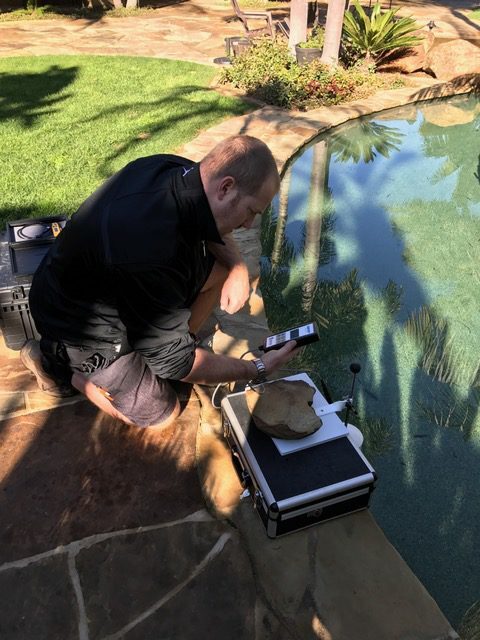
Dye testing for shell cracks
A crack in the gunite, plaster or tile can be hard to see, especially in a large commercial pool. Dye testing is a simple way to confirm a crack is leaking. A technician squirts a concentrated dye near the suspected crack while the pump is off. If the dye is pulled into the crack instead of dispersing in the water, the crack is a leak path. This method works for cracks in the floor, walls, steps, and around light fixtures and drains. It is quick and does not require draining the pool, which is a major advantage for a facility that cannot afford downtime.
Keeping an inspection record
One of the most practical things a facility manager can do is keep a log of water usage, meter readings, and visual checks. A simple notebook or spreadsheet with daily entries makes it easy to spot trends. If the make-up water increases by twenty percent over a month, that is a signal to investigate. The same record helps a leak detection specialist understand the history of the problem and choose the right testing method. Without a record, it is hard to tell whether the water loss is new or has been going on for months.
When to call a professional
Not every leak is something a facility manager can fix. Leaks in underground pipes, in the pool shell below the waterline, or in the main drain line require specialized equipment and training. That is where a service like sandiegopoolservice.net comes in. Their focus is leak detection for residential and commercial pools, spas and related plumbing in the San Diego area. Calling them early, when the water loss is still a small anomaly, is cheaper and less disruptive than waiting until the leak causes structural damage or forces a pool closure. A professional leak detection team uses electronic listening devices, pressure testing, and camera inspection to find the exact location of the leak without digging up the whole deck.
The cost of ignoring small signs
Water that disappears into a leak is not just a utility bill problem. It can undermine the soil under the pool deck, causing cracks and settling. It can erode the base of the pool shell, leading to structural issues that require major repairs. In a hotel or apartment complex, a pool closure for repairs means unhappy guests and lost revenue. The early warning signs are easy to overlook when you are busy, but they are also easy to check. A few minutes of observation each day, combined with a simple log, can save thousands of dollars and a lot of headaches down the road.

For facility managers who want a deeper understanding of their pool's water balance, sandiegopoolservice.net offers a perspective on professional leak detection that goes beyond what a bucket test can show. Knowing the difference between normal evaporation and a hidden leak is a skill that pays for itself many times over. The earlier you catch it, the simpler the fix.